

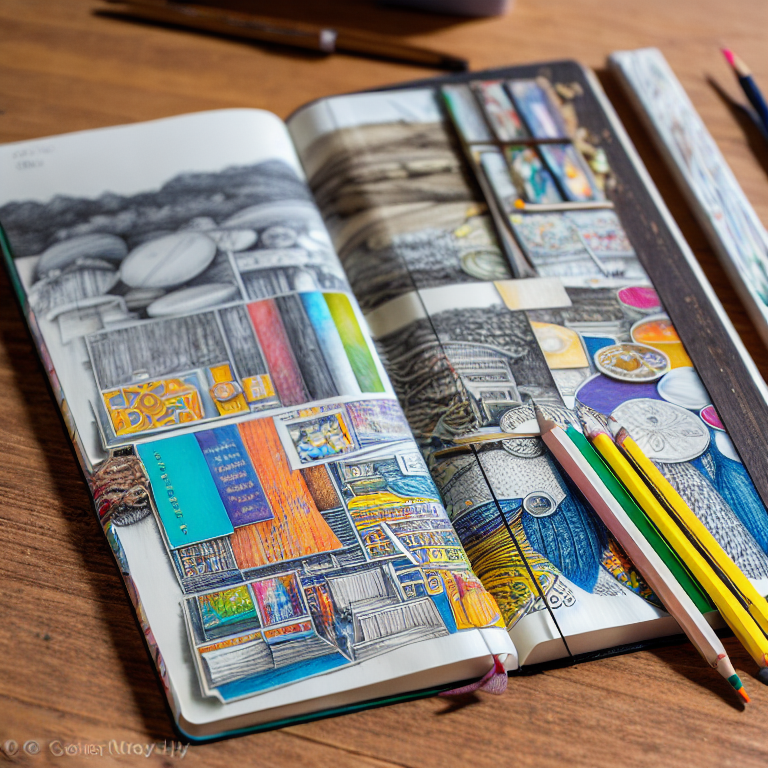
Ever flipped through a sketchbook and thought, “I wish I could draw like that”? The truth is, sketching isn’t about talent—it’s about practice and knowing a few simple tricks. Whether you’re doodling in the margins of your notebook or dreaming of creating detailed artwork, these easy ways to improve your sketching skills will help you see real progress fast.
Let’s start with the most important thing: everyone can sketch. Even if your first attempts look like chicken scratch, you’re already on the right path. The key is to stop comparing yourself to professional artists and focus on your own journey. Your unique style will develop naturally as you keep practicing.
One of the biggest mistakes beginners make is trying to draw perfect lines right away. Instead, start with light, loose sketches. Think of your pencil as a tool for exploration rather than a pen that must create flawless lines. This approach takes the pressure off and actually helps you improve faster.
Building Your Foundation: Basic Shapes and Lines
Before diving into complex drawings, master the basics. Everything you see can be broken down into simple shapes: circles, squares, triangles, and rectangles. Practice drawing these shapes over and over until you can create them confidently. This might sound boring, but it’s like learning scales before playing a song on piano.
Try this exercise: take everyday objects around your house and break them down into basic shapes. A coffee mug becomes a cylinder with a handle. A book is just a rectangle. A chair? More rectangles and some lines for the legs. This skill will transform how you see the world and make sketching much easier.
Another crucial foundation skill is line quality. Practice drawing different types of lines: straight, curved, thick, thin, light, and dark. Vary your pressure on the pencil to create different effects. Strong, confident lines come from practice, not from having a “good hand.”
The Power of Daily Practice (Even 10 Minutes Counts)
Here’s a secret professional artists know: consistency beats intensity every time. You’re better off sketching for 10 minutes every day than doing a marathon session once a month. Set up a simple routine that fits your life. Keep a small sketchbook in your bag or use a drawing app on your phone.
Start with quick gesture drawings. Set a timer for 30 seconds and sketch simple poses or objects as fast as you can. This trains your eye to see proportions quickly and builds muscle memory. Don’t worry about details—focus on capturing the essence of what you’re drawing.
As you build this habit, you’ll notice your hand-eye coordination improving. Lines that once felt shaky will become smoother. Shapes that seemed impossible will start to make sense. This is where many people give up too soon, thinking they’re not improving when actually they’re right on track.
Understanding Light and Shadow: Your Secret Weapon
One thing that separates amateur sketches from professional ones is how light and shadow are handled. You don’t need to be an expert to start using this to your advantage. Begin by observing how light falls on simple objects. Notice where the darkest shadows are and where the brightest highlights appear.
Practice creating different values with your pencil. Instead of using outlines for everything, try suggesting edges with shadows. For example, instead of drawing a circle’s outline to show a ball, use shading to create the illusion of a three-dimensional sphere. This simple shift makes your sketches pop off the page.
A great exercise is the “value scale.” Draw a row of boxes and shade them from pure white to solid black, creating smooth transitions between each shade. This trains your eye to see subtle differences in tone and helps you create more realistic sketches.
Breaking Down Complex Subjects
When you see something complicated, your first thought might be, “I could never draw that.” But here’s the trick: break it down into manageable pieces. Take a face, for example. It’s not one difficult shape—it’s a collection of features, each with its own simple structure.
Start with the overall head shape, then add guidelines for where the eyes, nose, and mouth go. Think of these as construction lines you’ll erase later. Then tackle each feature individually. The eyes are basically circles with details. The nose is a series of simple planes. This step-by-step approach makes anything possible.
This same principle works for buildings, animals, or complex scenes. Don’t try to draw the whole thing at once. Build it piece by piece, checking proportions as you go. Many artists use reference photos and trace basic shapes to understand structure before attempting freehand drawing.
The Magic of Negative Space
Here’s a concept that will change how you sketch: negative space. This is the area around and between your subject. Instead of focusing only on the object you’re drawing, pay attention to the shapes of the spaces around it. This tricks your brain into seeing more accurately.
For example, if you’re drawing a chair, don’t just think “chair.” Look at the triangular space between the legs, the rectangle of empty space under the seat, the curves around the backrest. Drawing these negative spaces often results in more accurate proportions than trying to draw the chair directly.
This technique is especially helpful for tricky subjects like hands or complex machinery. Your brain has strong preconceptions about what these things “should” look like, but negative space helps you see what’s actually there.
Tools That Make a Difference
You don’t need expensive supplies to improve your sketching, but having the right tools can make practice more enjoyable. Start with a basic sketchbook and a few pencils of different hardness. A 2B pencil is great for general sketching, while a 4B or 6B gives you darker, richer lines.
Invest in a good eraser—not just the pink ones from school, but a kneaded eraser that you can shape for precise corrections. A blending stump helps smooth shading, though your finger works too. The key is having tools that feel comfortable in your hand and work reliably.
As you progress, you might want to try different mediums. Charcoal creates dramatic effects. Ink forces you to commit to your lines. Digital tools offer endless undo options. But start simple—master paper and pencil first.
Learning from Others (Without Copying)
Studying other artists’ work is invaluable, but there’s a right and wrong way to do it. Don’t just copy drawings—analyze them. Ask yourself: How did they handle shading here? What makes this line feel confident? Why does this composition work?
Look for tutorials and online resources that explain techniques rather than just showing finished work. Many artists share their process through videos or step-by-step guides. This gives you insight into their thinking, not just their results.
Consider joining online art communities or local drawing groups. Seeing others’ progress and sharing your own creates accountability and motivation. You’ll also discover new techniques and get helpful feedback on your work.
Finding Inspiration Everywhere
Inspiration for sketching is all around you—you just need to train yourself to see it. Carry your sketchbook everywhere and draw what you observe: people in cafes, buildings on your commute, plants in your garden. These quick sketches build your visual library and improve your speed.
Try themed drawing challenges. Draw only circles for a week. Sketch only in one color. Draw the same object from different angles each day. These limitations actually boost creativity and help you discover new approaches.
Don’t limit yourself to “pretty” subjects. Sketch rusty tools, cracked sidewalks, messy desks. These ordinary things teach you valuable lessons about texture, light, and form that transfer to more complex subjects.
Overcoming Common Frustrations
Every artist hits plateaus where improvement seems to stop. This is normal! During these times, try switching your approach. If you’ve been focused on realism, try a more expressive style. If you always draw from photos, try drawing from life. Sometimes a fresh perspective breaks through the block.
Another common frustration is inconsistency—some days your sketches look great, others terrible. This doesn’t mean you’re not improving; it means you’re human. Keep a sketchbook dedicated to “bad” drawings. Over time, you’ll see these “bad” sketches getting better, even if they don’t feel that way in the moment.
Remember that every professional artist was once a beginner who kept going despite frustration. The difference between those who improve and those who don’t is simply persistence.
Taking Your Skills Further
Once you’re comfortable with basic sketching, challenge yourself with new subjects and techniques. Try urban sketching to capture street scenes. Explore figure drawing to understand human anatomy. Experiment with different styles—realistic, cartoonish, abstract.
Consider learning about composition and perspective. These foundational art principles will elevate your sketches from simple drawings to compelling artwork. Understanding how to arrange elements on a page and create depth with perspective opens up endless creative possibilities.
You might also explore how sketching connects to other skills. Designers use sketching for brainstorming. Architects sketch building concepts. Even writers sketch characters or scenes. Your improved sketching skills can enhance many areas of your life.
Frequently Asked Questions (FAQ)
#### How long does it take to get good at sketching?
Improvement depends on consistent practice rather than natural talent. Most people see noticeable progress within 2-3 months of daily practice. The key is focusing on learning rather than perfection. Even professional artists continue improving throughout their careers.
#### What should I draw when I don’t know what to sketch?
Start with your immediate surroundings. Sketch your coffee mug, your shoes, your hand. Draw from photos if you’re not ready for real-life subjects. Try simple exercises like drawing 50 circles or 30 straight lines. The goal is to keep your pencil moving, not to create masterpieces.
#### Do I need expensive art supplies to improve?
Absolutely not. A basic sketchbook and a few pencils are all you need to start. Many professional artists create incredible work with minimal supplies. As you improve, you might want to try different tools, but they won’t make you better—practice will.
#### How do I develop my own drawing style?
Your style develops naturally through consistent practice and experimentation. Don’t force it—instead, try different approaches and notice what feels most comfortable. Over time, you’ll gravitate toward certain techniques, subjects, or ways of expressing yourself. This unique combination becomes your style.
#### Is it okay to trace or use references when learning?
Yes! Tracing can help you understand proportions and shapes, especially for complex subjects. Using references (photos, objects, other art) is standard practice for artists at all levels. The goal is to learn, not to prove you can draw from memory. As you improve, you’ll rely less on tracing and more on your own skills.
#### How do I stay motivated when my sketches look bad?
Keep a progress journal where you date your sketches. Looking back at older work shows you how far you’ve come, even when current sketches feel disappointing. Also, remember that “bad” sketches are essential for learning—they show you what to work on next. Join online communities where others share their struggles too; you’re not alone in feeling frustrated sometimes.
Conclusion
Improving your sketching skills is one of the most rewarding creative journeys you can take. It’s not about becoming a professional artist—it’s about developing a new way of seeing the world and expressing yourself. The techniques we’ve covered, from mastering basic shapes to understanding negative space, are your tools for growth.
Remember that every great artist started exactly where you are now. They succeeded not because they had special talent, but because they kept practicing, stayed curious, and didn’t give up when things got challenging. Your unique perspective and experiences will shape your art in ways no one else can replicate.
Start small, stay consistent, and celebrate every bit of progress. Whether you’re sketching for relaxation, creative expression, or professional development, these easy ways to improve your sketching skills will serve you for years to come. Pick up that pencil today—your artistic journey is waiting to begin.






Leave a Reply